
Originally published in the Winter/Spring 2025 edition of the Virginia Defender, issue 76, printed March 26. Reproduced here for accessibility and archival purposes. To find other stories in the Winter/Spring 2025 issue or to download the full PDF, see this post. For other issues dating back to 2012, see the Full Issues page.
By Ana Edwards
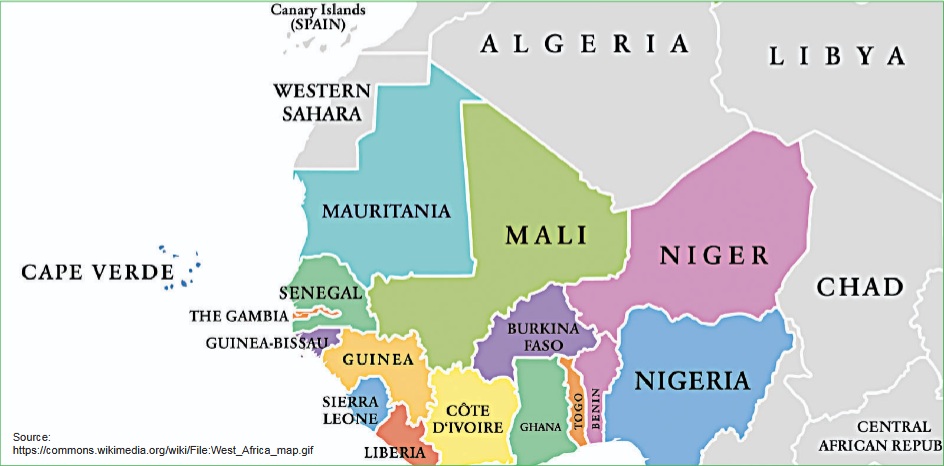
Between 2022 and 2024, three West African nations, Mali, Niger and Burkina Faso, finally broke military and economic ties with their former colonial power, France. They now work with their neighbors to address security concerns on their borders and northern areas.
All three nations had been lauded by the West for their democracies, but this satisfaction belied the frustrations West Africans felt at the neocolonial policies their leaders failed to challenge.
France’s approach to all three of its former colonies remains non-collaborative, extractive and self-serving. Wanting to appear as an essential geopolitical player, France has ignored opportunities to build honest and mutually productive relationships with its African peers.
The assertion of the people’s right to self-determination in the face of their former oppressor is felt to be long overdue, even as a military government is not the permanent solution the people prefer.
Mali, Niger and Burkina Faso now all have military-led governments. Ibrahim Traoré has been Burkina Faso’s interim president since their coup in 2022. Mali’s General Assimi Goïta has been interim president since ousting the previous military leader, Bah Ndaw, in May 2021. Niger’s coup is the most recent, July 2023, and General Abdourahmane “Omar” Tchiani was appointed its new leader.
Mali has strengthened its ties with Russia, but now has to investigate reports of abuses and massacres by the Wagner Group, the Russian private security contractor (mercenaries). Twenty-four people returning from a wedding in the city of Gao were gunned down in an attack said to have been committed by Wagner and Mali’s own army.
Democratic processes have taken a backseat to current efforts to maintain stability. The new governments are not universally supported, and projects such as conscription, repression of journalists and economic lag keep the people less than happy.
In 2024, the three countries also withdrew from the Economic Community of West African States (ECOWAS), citing ineffectiveness in the face of ongoing terrorism and conflict in their shared borderlands to the north, and the inability to address the migratory needs of the Tuareg people, who struggle to maintain a nomadic way of life and mobility across borders created by colonial forces in the 19th century and maintained after independence in 1960.
The Alliance of Sahel States (AES) is the new regional organization from which Mali, Niger and Burkina Faso will leverage regional influence.
Categories: International & Antiwar News
 The Virginia Defender