
Originally published in the Summer/Fall 2025 edition of the Virginia Defender, issue 77, printed December 11. Reproduced here for accessibility and archival purposes. To find other stories in the Summer/Fall 2025 issue or to download the full PDF, see this post. For other issues dating back to 2012, see the Full Issues page.
By Shumce-Sabah Jayeh
While many people may not know much about Sudan, it is currently facing one of the largest humanitarian crises in the world.
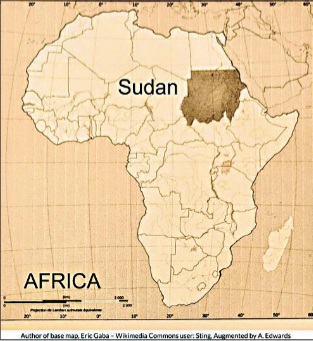
For reference, Sudan is the country located directly south of Egypt and next to the Red Sea. It was the largest nation in both Africa and the Arab League until South Sudan seceded in 2011, which made Sudan the third largest. Today the population is around 50 million people.
Sudan entered its current war in 2023. The conflict is between the Sudanese Armed Forces, which are composed of Sudanese nationals, and the Rapid Support Forces, which are heavily funded militias seeking control of the country.
Many reports point to the United Arab Emirates as a major financial supporter of these militias. The fact that the UAE is a major U.S. ally in the critical Middle East region might explain why the U.S. has generally been silent about what is happening in Sudan. The UAE hosts the Al Dhafra Air Base, a critical hub for the U.S. Air Force. El Ali Port is the U.S. Navy’s largest port of call in the Middle East, regularly hosting U.S. aircraft carriers and other vessels.
The UAE is not the only country supporting one or the other side in the Sudanese conflict, and the reason is connected to Sudan’s resources, which are extremely valuable.
Sudan and South Sudan together are among the world’s top gold producers and hold significant oil reserves. These resources attract foreign powers that want influence over Sudan’s land and wealth. Their interference has caused deep suffering for the Sudanese people.
War and the foreign involvement that is funding it have caused Sudan economic collapse, widespread fear and mass starvation throughout this beautiful Saharan land.
Nearly 12 million people have been displaced due to the most recent war, with the number of people in need of humanitarian aid reaching nearly 30 million. Around half the population faces extreme food insecurity, meaning nearly 25 million do notknow when they will have their next meal.
Further, women are facing horrific violence in areas controlled by militias, to the point where many choose death over the alternative. Nearly 12.1 million, about 25% of the population, are at risk of gender-based crimes.
Entire communities have been destroyed. Millions have been displaced inside and outside the country, not to mention landmarks destroyed, homes invaded and families split apart.
This crisis is one of the worst in Sudan’s modern history. Many people want to escape but cannot afford to. Some are turned away at the border for not having necessary documents. This causes others to flee by dangerous desert routes, risking their lives as refugees. Sudan’s natural wealth is being exploited by those whose greed overshadows any sense of humanity, while the people continue to suffer.
Hard times are nothing new in Sudan. Throughout its past, Sudan has experienced periods of occupation, being captured and freed since ancient times. It was occupied by Britain from 1899 until Sudan finally gained its independence on Jan. 1, 1956.
The issues did not end there. Since independence, the country has gone through several military takeovers.
In 1989, Omar Al-Bashir used the military to take control of the government. His rule lasted nearly 30 years. During his time in power, the Darfur Genocide tookplace. Rebel groups in Darfur, mainly the Sudan Liberation Movement/Army and the Justice and Equality Movement, fought against the government. The first genocide in Darfur resulted in hundreds of thousands of deaths and displaced millions of Sudanese citizens.
The issues have risen once again with the chaos now ravaging the country. The current iteration has seen the RSF militias killing non-Arabs in Darfur. Millions again are displaced. This is destroying native allies of Sudan residents, who may have had ties going back generations, wiped out in the violence fueled by the greed of those with the glimmer of the riches of others in their eyes. Extreme violence against women has become widespread in what has becomea lawless land.
Al-Bashir was eventually removed from power after decades of violence and corruption, which even led to Sudan being suspended from the African Union. After his removal, other countries, including the United Arab Emirates, began investing heavily in Sudan’s military and political landscape.
Sudan’s story today is one of pain, but also resilience. The soul of the country is being suffocated by conflict and outside forces, yet the Sudanese people remain strong, hopeful and determined to survive. They deserve global attention and support in this difficult time.
Recently, all over Africa, nations have begun reclaiming their resources and using them to boost their own infrastructures, with countries such as Nigeria leading the economic charge.
This can also be considered another reason for the terror currently happening in Sudan. It’s too valuable for outside forces to lose, so for now it’s a land of hunger and chaos.
Categories: International & Antiwar News
 The Virginia Defender